
Carbon vs Fibreglass Padel Rackets: Which Should You Choose?
How carbon and fibreglass faces change the feel of a padel racket, what 3K, 12K and 18K mean and which to choose.
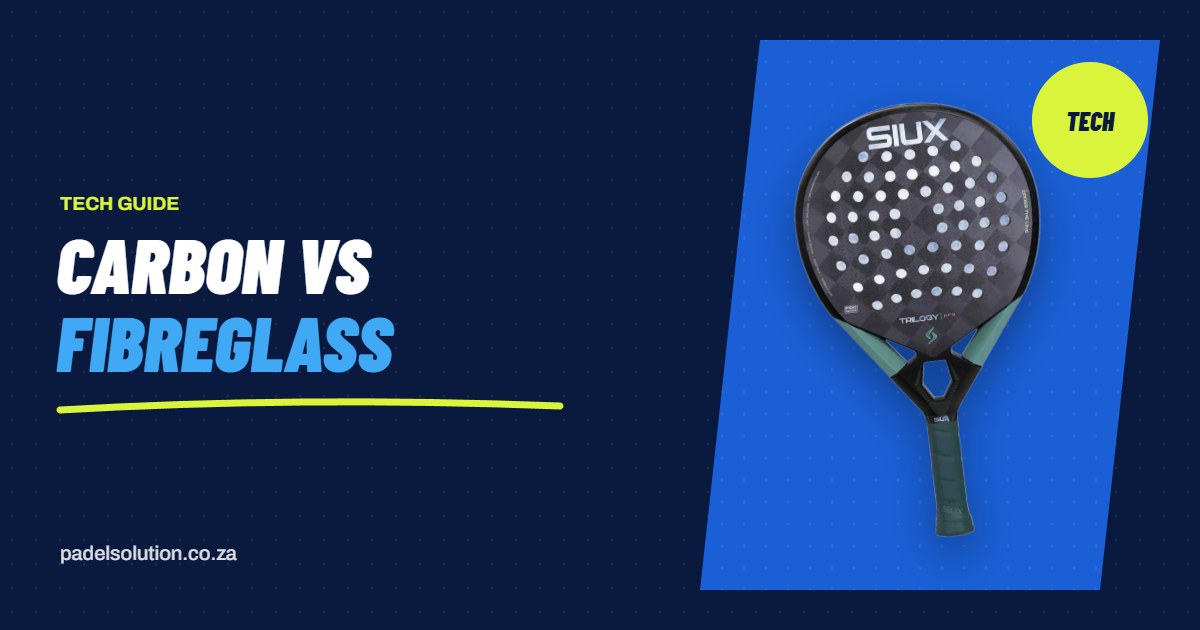
Look at any padel racket spec sheet and you will see the face material listed near the top: fibreglass, carbon, 3K, 12K, 18K and more. The material on the face of the racket has a big effect on how it feels, how much power it gives and how long it lasts. Here is a plain-English guide to carbon vs fibreglass padel rackets and how to choose.
How a padel racket is built
A padel racket is a sandwich. In the middle is a foam core, usually EVA or a softer foam. On each side of the core is a face made of layers of fibreglass, carbon fibre or a blend of both. The frame is usually tubular carbon or fibreglass. The face material controls how the ball comes off the racket and how much vibration reaches your arm.
Fibreglass padel rackets
Fibreglass is more flexible than carbon. When the ball hits the face, it gives a little and springs back, which helps the ball leave the racket even when you do not swing hard.
- Pros: comfortable, forgiving, easy power at slow swing speeds, usually more affordable.
- Cons: less precise on fast shots, can feel soft or “trampoline-like” to advanced players, generally less durable than carbon.
- Best for: beginners, social players and anyone who wants comfort first.
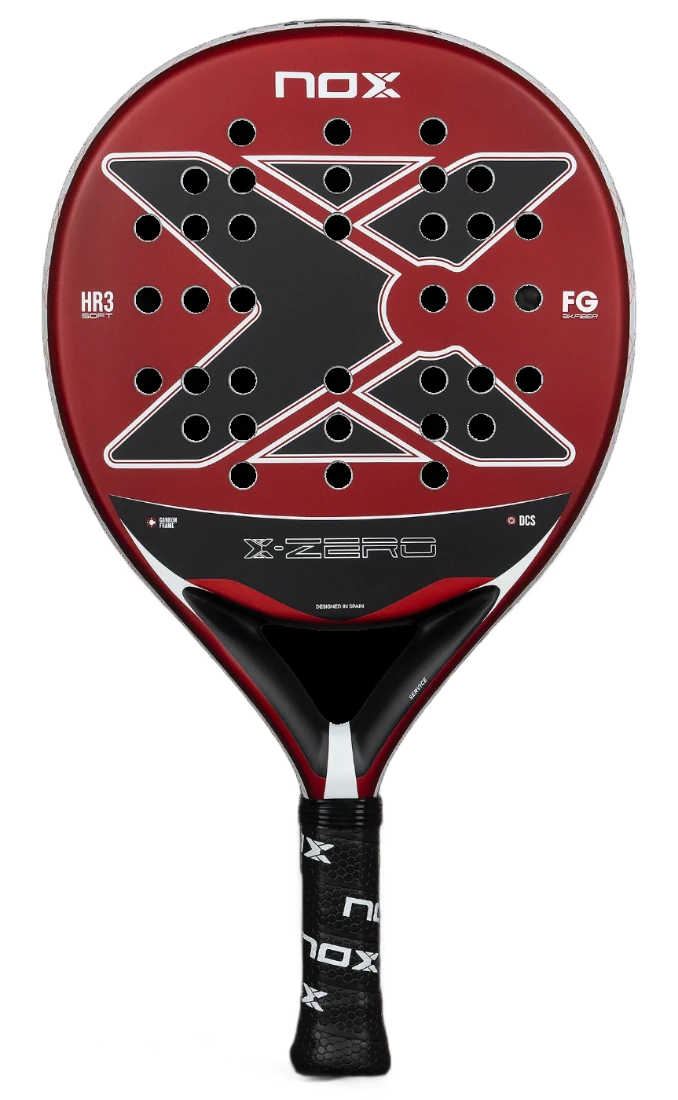
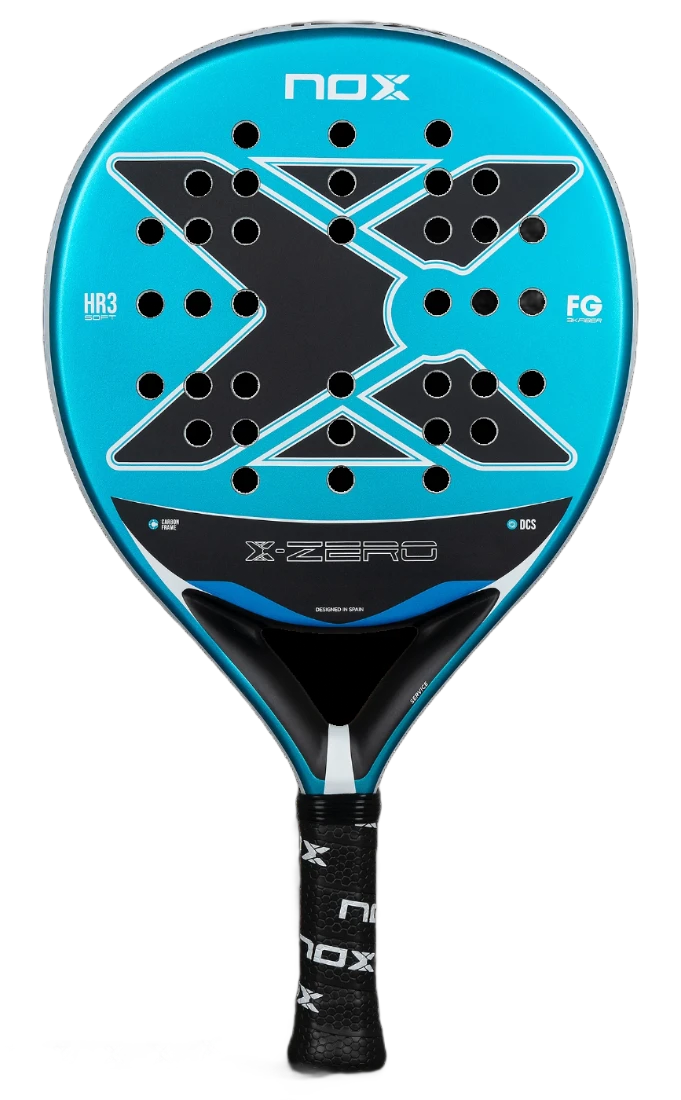
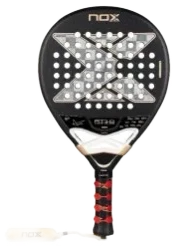
Fibreglass rackets we like include the NOX X-Zero Red and X-Zero Blue.
Carbon padel rackets
Carbon fibre is stiffer and lighter for its strength. The face deforms less on impact, so energy from a fast swing goes straight into the ball.
- Pros: more control and precision, more power on fast swings, better durability.
- Cons: less help on slow shots, can transmit more vibration, usually more expensive.
- Best for: intermediate and advanced players with consistent technique.
What do 3K, 12K and 18K mean?
The “K” number tells you how many thousand carbon filaments are in each bundle of the weave. 3K has 3,000 filaments per bundle, 12K has 12,000 and 18K has 18,000. Different weaves change the stiffness, feel and look of the face. A higher number is not automatically better. It is simply a different feel, and brands tune the rest of the racket around it. The best way to judge is the overall spec: shape, balance, core and weight together.
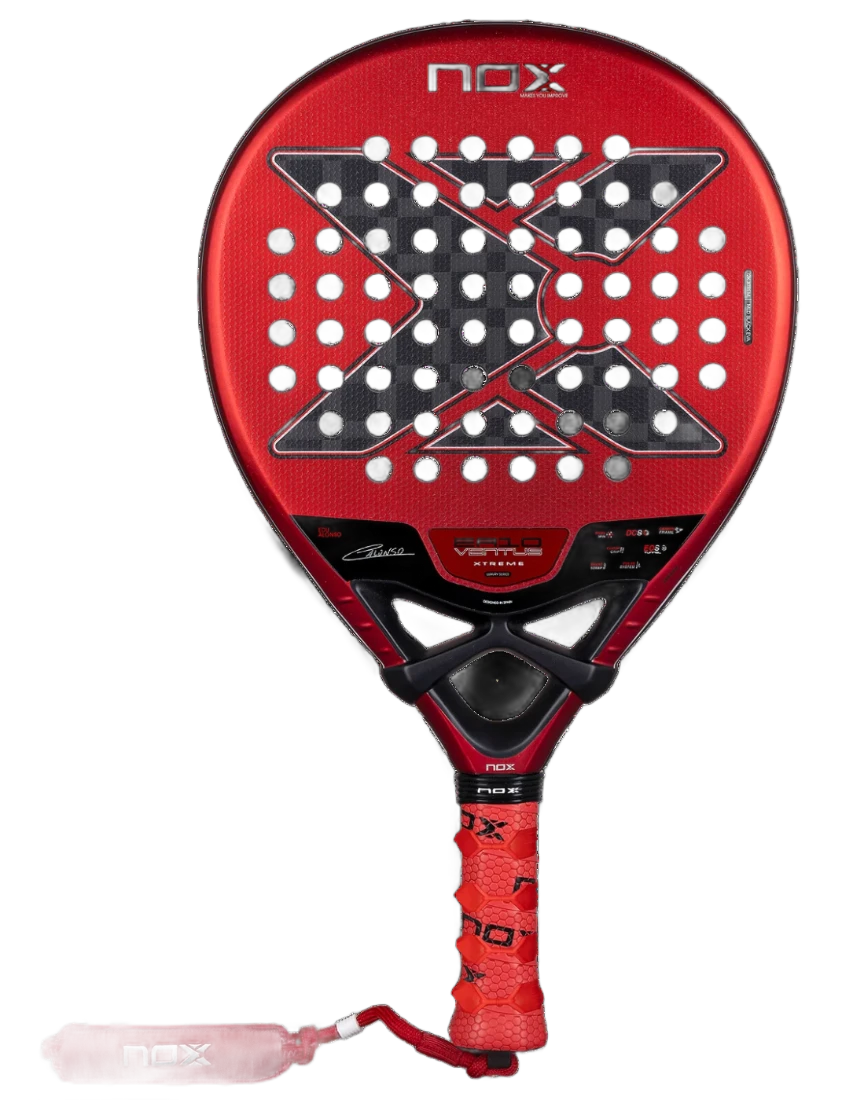
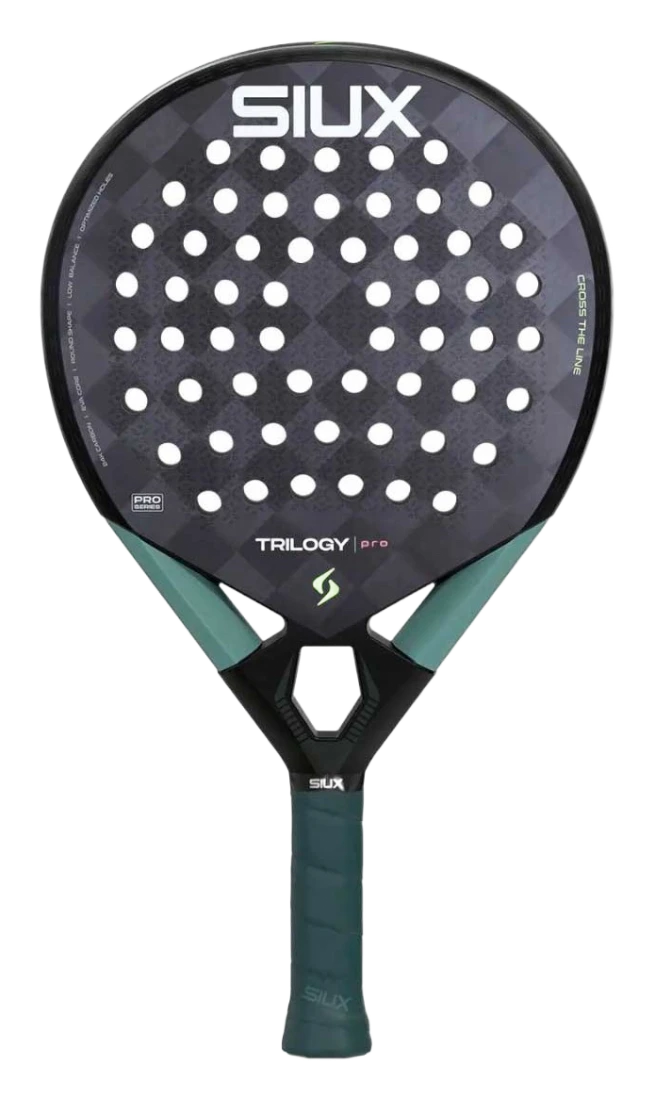
Examples in our range: the NOX EA10 Ventus Hybrid 12K, the NOX AT10 Genius 18K and the Siux Trilogy Pro 2026.
Hybrid faces: the best of both
Many rackets blend carbon and fibreglass, or combine carbon with materials such as aluminised fibreglass, to get a balance of comfort and crispness. Hybrids are an excellent middle ground for improving players.
Does the core matter more than the face?
Both matter. A soft core with a fibreglass face is the most comfortable combination. A hard core with a carbon face is the most precise and powerful when you swing fast, but the least forgiving. Most intermediate rackets pair a carbon face with a medium core.
So which should you buy?
- New to padel or playing once a week: fibreglass or a soft carbon blend, ideally a round racket.
- Improving and playing two or three times a week: a carbon or hybrid face, often a teardrop. See our best intermediate padel rackets.
- Advanced attacking player: full carbon, often a diamond, with a firmer core.
Not sure? Take the Racket Finder or ask us on 078 835 6431.
Gear from
this guide
Keep reading
The Best 2027 Padel Rackets: What’s New From Nox, Bullpadel and Babolat
What is new in the 2027 padel rackets from Nox, Bullpadel and Babolat, who each one suits, and whether to…
Padel Bags: How to Choose the Right One (South Africa Guide)
Racket bag, backpack or cover? How to choose a padel bag, why a thermal compartment matters, and the bags we…

Best Padel Shoes in South Africa: A Buying Guide for 2026
Sole patterns, fit, support and when to replace them, plus the padel shoes we stock in South Africa.
