
Padel Rules for Beginners: Serving, Scoring and the Walls
New to padel? The court, how to serve, how scoring works and how to play off the walls, explained simply for South African beginners.
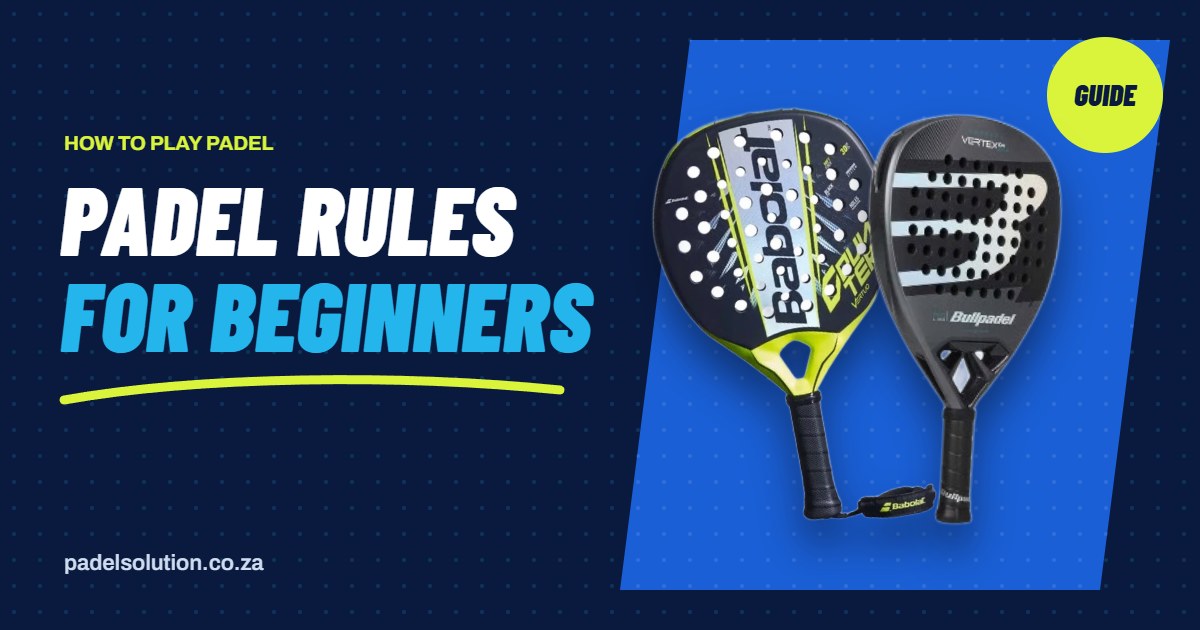
Padel is the fastest-growing racket sport in South Africa, and one of the easiest to pick up. If you have played tennis or squash you will feel at home quickly, but the walls and a few unique rules catch everyone out at first. This beginner’s guide covers the court, serving, scoring and how the walls work, so you can walk on court for your first game with confidence.
The basics
- Padel is almost always played as doubles: two players on each side.
- The court is 20 m long and 10 m wide, enclosed by glass walls at the back and a combination of glass and mesh fencing on the sides.
- A net divides the court in the middle, and each half has a service line and a centre line, much like tennis.
- You play with a solid, stringless padel racket and a padel ball, which looks like a tennis ball but has slightly less pressure.
How to serve in padel
The serve is where most beginners pick up faults, so it is worth getting right.
- Stand behind the service line, with at least one foot touching the ground.
- Bounce the ball once behind the service line before you hit it.
- Hit the ball at or below waist height. Overhead serves are not allowed.
- Serve diagonally into the opponent’s service box, starting from the right-hand side.
- The ball must bounce in the service box. It may then hit the back or side glass, but if it hits the metal mesh fencing before bouncing again, it is a fault.
Like tennis, you get two serves. If the ball clips the net and lands in the correct box, it is a let and you serve again.
Scoring
Padel uses the same scoring as tennis: 15, 30, 40, game. Six games win a set (you need to be two games clear, with a tie-break at 6 all), and matches are usually best of three sets.
Many clubs and the professional tours use the golden point: at 40 all (deuce), the next point wins the game, and the receiving pair chooses which player receives. Agree before you start whether you are playing advantages or golden point.
Playing off the walls
The walls are what make padel special. The key rule is simple: the ball must bounce on the ground on your side before it touches any wall.
- After the ball bounces once on your side, it can hit the back wall or side walls, and you can still play it before it bounces a second time.
- You can hit the ball against your own walls to get it back over the net, as long as it then crosses the net without touching the ground again.
- If your shot crosses the net and hits the opponent’s wall or fence before bouncing, you lose the point.
- The ball can only bounce once on each side, just like tennis.
Learning to let the ball come off the back glass, instead of rushing to hit it early, is the single biggest step most new players make.
Other rules worth knowing
- You may volley the ball before it bounces, except on the return of serve, which must bounce first.
- You may not touch the net with your body or racket during a point.
- If the ball hits you or your partner, you lose the point.
- Advanced players can play the ball outside the court through open doors on some courts, but most club courts in South Africa are fully enclosed.
Tips for your first game
- Stay with your partner. Move up and back together, side by side.
- Win the net. Most points in padel are won by the pair at the net, not at the back.
- Use the lob. A good lob over the opponents’ heads pushes them off the net.
- Keep it simple. Consistency beats power. Get the ball back and let your opponents make the mistake.
What you need to start playing
All you need is a racket, a set of balls and court shoes with grip. A round, forgiving racket is ideal for beginners; our guide to the best padel rackets for beginners explains why, and our padel shoe guide covers what to wear. Most clubs also hire out rackets if you want to try before you buy.
Ready to get kitted out? Shop padel rackets, balls and shoes, delivered anywhere in South Africa.
Keep reading

The Best 2027 Padel Rackets: What’s New From Nox, Bullpadel and Babolat
What is new in the 2027 padel rackets from Nox, Bullpadel and Babolat, who each one suits, and whether to…
Padel Bags: How to Choose the Right One (South Africa Guide)
Racket bag, backpack or cover? How to choose a padel bag, why a thermal compartment matters, and the bags we…

Best Padel Shoes in South Africa: A Buying Guide for 2026
Sole patterns, fit, support and when to replace them, plus the padel shoes we stock in South Africa.
