
Padel vs Tennis: The Key Differences Explained
How padel and tennis differ, from the court and racket to the serve, walls and scoring, plus the gear you need to start.
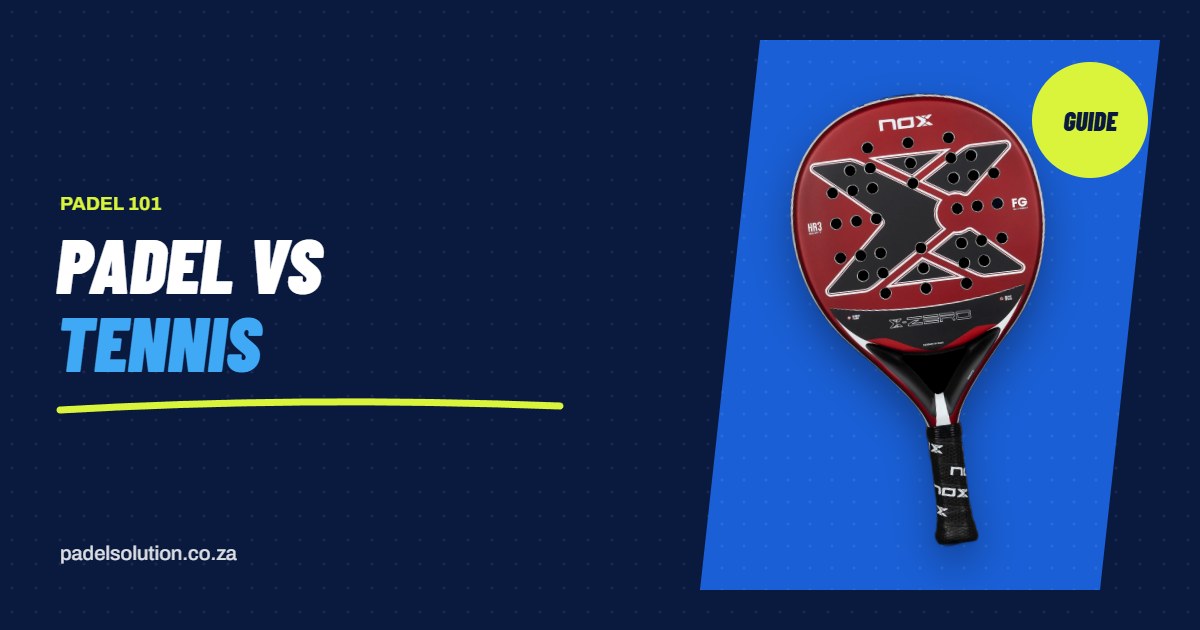
Padel and tennis share a scoring system and a love of the yellow ball, but that is about where the similarities end. If you grew up on a tennis court and are wondering whether padel is worth a try, or you are trying to explain the new obsession to a friend, this guide breaks down the real differences between padel and tennis: the court, the racket, the ball, the rules and how each game feels to play.
Padel vs tennis at a glance
- Court: a padel court is 20 m by 10 m and enclosed by glass and mesh walls. A doubles tennis court is roughly 23.8 m by 11 m with no walls.
- Players: padel is almost always played as doubles. Tennis is played as singles or doubles.
- Racket: a padel racket is solid, stringless, perforated and shorter, with a wrist strap. A tennis racket is longer and strung.
- Ball: padel balls look like tennis balls but have slightly lower pressure, so they play a little slower.
- Serve: padel serves are underarm and hit at or below waist height. Tennis serves are overhead.
- Walls: in padel the ball can be played off the glass after it bounces. In tennis there are no walls to use.
- Scoring: the same as tennis (15, 30, 40, game), though many clubs use the golden point at deuce.
The court: smaller, enclosed and social
The padel court is about a third of the size of a tennis court once you account for the space around a tennis court. With four players on a smaller area, everyone is close to the action, rallies are longer and conversation between points is part of the game. The glass back walls and side panels turn every point into a puzzle: a ball that would be a clean winner in tennis can come back off the glass and keep the rally alive.
The racket: no strings attached
A padel racket has a solid face made of foam (EVA or similar) wrapped in carbon or fibreglass, with holes drilled through it. It is shorter than a tennis racket, so you are closer to the ball and reaction volleys feel natural. Most adult rackets weigh between 340 g and 380 g. If you are choosing your first one, start with our guide on how to choose a padel racket.
The serve: underarm and friendly
The padel serve is one of the biggest reasons beginners pick the game up so quickly. You bounce the ball behind the service line and hit it underarm, at or below waist height, diagonally into the opponent’s service box. You get two attempts, just like tennis. There are no 200 km/h aces, which means more rallies and fewer frustrating double faults for new players.
The walls change everything
In padel, the ball must bounce on the ground first, but after that it can hit the back or side glass and still be played. You can also hit the ball against your own glass to get it back over the net. Learning when to let the ball come off the wall instead of rushing it is the skill that separates new players from improving ones. Our padel rules for beginners explains wall play in more detail.
Which is easier to learn?
For most people, padel is easier to get started with. The underarm serve, shorter racket, slower ball and smaller court mean you can have proper rallies in your very first session. Tennis has a steeper learning curve, especially the serve and the groundstroke technique needed to keep the ball in a large court. That said, padel has plenty of depth: positioning, wall play, the bandeja and the vibora take years to master.
Is padel good for tennis players?
Yes. Tennis players usually adapt fast because they already read the ball well and are comfortable at the net. The main habits to unlearn are big swings (padel rewards control and placement) and hitting the ball early instead of letting it come off the glass. Many tennis players in South Africa now play both.
Gear you need to start padel
- A padel racket. Round shapes are the most forgiving. Browse our round padel rackets.
- Padel shoes with a herringbone or omni sole for sand-filled turf. See our padel shoes guide.
- A can of padel balls. Tennis balls are faster and bounce differently.
- An overgrip or two to keep your racket comfortable.
Ready to try padel?
If you are switching from tennis or picking up a racket for the first time, we are happy to help you choose. Use the Racket Finder, or contact us on 078 835 6431. We deliver anywhere in South Africa, free on orders over R1,500.
Keep reading
The Best 2027 Padel Rackets: What’s New From Nox, Bullpadel and Babolat
What is new in the 2027 padel rackets from Nox, Bullpadel and Babolat, who each one suits, and whether to…
Padel Bags: How to Choose the Right One (South Africa Guide)
Racket bag, backpack or cover? How to choose a padel bag, why a thermal compartment matters, and the bags we…

Best Padel Shoes in South Africa: A Buying Guide for 2026
Sole patterns, fit, support and when to replace them, plus the padel shoes we stock in South Africa.
